11 May 2010

Yummy Yeast, aka Fabulous Finnish Cardamom Bread


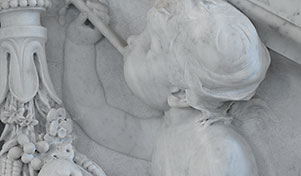
So, as I am sure you've figured out, bits and pieces of my real life tend to bleed into this blog. My most recent trip into the heart of the Nation's Capitol lead me to the Library of Congress. I've lived in DC for four years now and never seen the pretty public part of the building. And here's what got me, there is science everywhere. The world's largest library LOVES science. There is a pillar representing it in the main reading room. Every major western power is attributed with adding something to Western Culture. America got science. There is ceiling fresco devoted to the eight major sciences that existed in the mid 19th Century (chemistry, physics, astronomy, mathematics, and more that I can't really remember right now, sorry). And, here's the coolest part there are putti (little Italian babies) on the main staircase. Each one has a profession, and the cook and the chemist are right next to each other. Yay, chemistry and cooking!

Cook
Chemist
So, on to our usual fare. Today's topic is yeast, yet again. Before we dive in I highly recommend that you read the last post to get the original skinny on these very cool microorganisms.

When you use yeast as a leavening agent in bread (the thing that makes dough or batter rise) you allow the yeast to expel CO2 as waste. The CO2 creates growing pockets of gas making the dough get bigger and bigger (and the ethanol that is also expelled makes it tastier and tastier). Yeast eats sugars and starches so the addition of potatoes, eggs, or sugar speeds up the rising process. Salt, hot water, and fats (butter, etc.) slow down the rising process. Easy enough. So, why should you let bread rise in a warm place? Think of yeast like a human being. When it is cold out, we all get sluggish, tired. We don't move a lot. As the temps get warmer we start to become more active, until at some point it becomes too hot and we stop working again. Yeast is the same way, too cold and it doesn't want to eat, too hot and it dies (like when you bake your bread). The other thing you have to worry about is the life span of yeast. When you aren't using a starter it is very difficult for the yeast to reproduce, so as time goes on the yeast begins to die off. If you let the dough rise too long in the first steps of a bread, it may not rise again because the yeast is dead. So, keep an eye on the dough.

I am a big fan of baking my own bread. I don't really know why, but it has something to do with the smell of fresh baked bread coming out of the oven. I made this slightly sweet bread as a special treat at Easter because, well, I love the flavor of cardamom and I had nothing better to do. I got the recipe from the Carmel Cookie (http://thecaramelcookie.blogspot.com/2010/02/finnish-cardamom-bread.html) and made a couple of small changes. First I increased the amount of cardamom, this is very lightly flavored. If you want a stronger cardamom flavor I would recommend adding a full teaspoon, because even doubling the amount to 1/2 teaspoon wasn't quite enough to really showcase the flavor. And second, I added a lemon butter glaze that just makes this bread. So here it is, my special treat.


Finnish Cardamom Bread with Lemon Glaze

Bread

Ingredients

1 Tablespoon dry activated yeast
1/4 cup warm water
1/2 cup + 1/2 teaspoon sugar
1 cup skim milk
2 eggs, beaten
1/2 t salt
1/2 teaspoon ground cardamom
4 1/2 cup flour
1/4 cup butter
1 beaten egg (for brushing)
granulated sugar (for sprinkling)

Mix yeast, warm water, and 1/2 teaspoon sugar until yeast dissolves. Set aside. Heat milk in a saucepan over low heat until small bubbles appear along the edges. Cool slightly. Add beaten eggs, 1/2 cup sugar, salt, cardamom, and 3 cups flour. Beat well. Add butter, beat well, Add yeast mixture. Add remaining flour in three additions. Mix well. Knead on a lightly floured surface until smooth and elastic (~10 min). Place dough in an oiled bowl. Cover and let double (~1 hour). Punch down and let rise again until doubled (~45 min). Divide the dough in half. From each half, roll three ropes 12-18 inches. Braid the ropes into two loaves. Place on a greased baking sheet. Let rise until doubled (~1 hour). Preheat oven to 375 degrees. Brush loaves with the beaten egg and sprinkle with sugar. Bake 25 minutes, or until the loaves sound hollow when tapped on the bottom.

Lemon Glaze

Ingredients

1 teaspoon vanilla
1 cup powdered sugar
1/4 cup butter
1-2 Tablespoons lemon juice

Melt the butter. Add vanilla. Whisk in powdered sugar. Add enough lemon juice to achieve desired consistency. For the bread it should be liquid enough to pour, but stiff enough to stick to the loaves. It took me about 1 Tablespoon of lemon juice to achieve the right consistency. Generously pour over the loaves. This glaze recipe is enough to glaze both loaves of bread.

04 May 2010

Fun Fungi, aka Prosciutto Pizza with Pizzaz


I love making pizza. It is so easy to make from scratch and the combinations are endless, so you can always use up whatever is in your refrigerator. The key to a good pizza is in the crust. And the key to a good crust is in the yeast.

Yeast is a single celled fungus that has been used for thousands of years as a leavening and fermenting agent. It feeds off of sugars and creates carbon dioxide and alcohol as waste. When you let bread dough rise the waste builds up creating more and more alcohol. Which gives it that very unique bread taste. The longer the bread is allowed to rise the more flavorful it becomes. But, the yeast produces less and less carbon dioxide, so after you punch it down the bread may not rise all the way again (more about yeast as a leavening agent later). It is a bit of a trade off in bread making so watch that dough! Pizza dough, on the other hand, doesn't really need to rise all that much. The flavor is all that matters, so you can just let it set for days in your refrigerator and let the yeast just do it's thing.


Yeast is very important in biochemistry and biology. Because it is a simple single celled organism it is very easy to study how proteins and enzymes work, and is a model for the study of larger organisms.

This is my favorite pizza. It is the perfect combination of salty and sweet and it just makes me happy. I got the recipe from the Pioneer Woman (if you haven't checked her out you need to, she is a down home kitchen goddess, http://thepioneerwoman.com/cooking) and she has never steered me wrong. Other fabulous combinations I've tried are roasted tomato and eggplant, BBQ chicken, and tomato basil, but you can let your imagination run wild. This crust lends itself to anything and everything.

Caramelized Onion and Prosciutto Pizza

Pizza Crust

Ingredients

1 teaspoon instant or dry active yeast
1-1/2 cups warm water
4 cups all purpose flour
1 teaspoon salt
1/3 olive oil

Sprinkle yeast over 1-1/2 cups warm water. Let stand for a few minutes.Combine the flour and salt. Drizzle in olive oil and mix well. Pour in water/yeast mixture and mix until a soft dough forms. Coat a separate bowl with olive oil. Place dough in and roll to coat (this keeps the dough from sticking to anything and from drying out). Cover with plastic wrap and place in the fridge for 24-48 hours.* Makes 2 crusts. Drizzle a baking sheet with olive oil. Take half the dough and stretch as thinly as possible onto the baking sheet.

*The other option is to let the dough rise in a warm place for a couple of hours and after it's allowed to rise either using immediately or placing in the freezer for up to 6 months.

Pizza Toppings/Assembly

Ingredients

1 pizza crust
2 Tablespoons olive oil
1/2 red onion, thinly sliced
1/4 cup brown sugar
1/2 lb prosciutto
Mozzarella Cheese
Parmesan Cheese

Preheat oven to 500 degrees. Heat the olive oil in a frying pan on medium heat. Add brown sugar and stir to dissolve. Add onion and cook until very soft and browned. Slice mozzarella and place on pizza crust. Add caramelized onions. Add prosciutto. Grate parmesan cheese all over. Bake 15-17 minutes, or until the crust is golden brown. Enjoy!!!

30 April 2010

The Department of Mad Scientists

So, this is a little off topic, I know. There isn't an ingredient pictured above. There isn't a recipe posted below. But there is a science lesson to be learned. I just finished reading a book called The Department of Mad Scientists by Michael Belfiore. It is a peak inside the understated and top secret world of DARPA (Defense Advanced Research Projects Administration). I was first introduced into the world of DARPA while I was working on Capitol Hill and it is probably the coolest thing ever. It is a branch of the defense department that funds the research necessary to get pure science (lab and university stuff) into applied science (3M and your store shelf). This is the most expensive step in the innovation process and is known as the Valley of Death. Very few new technologies are able to overcome this gap. No one works for DARPA for more than a few years by design, but they have come up with some of the coolest stuff from the rocket that got us to the moon, to artificial hands that work like the real thing, to the internet, to a computer that learns what you want instead of you learning how to use it. It might be the most important government department you've never heard of and it proves how important science and technology really are to our everyday lives. Check it out and be amazed!

27 April 2010

Marvelous Mixtures Part 2, Perfect Panna Cotta


So, this weekend my kitchen was a little crazy. I had a bunch of friends over for homemade pizza, cannoli, and panna cotta. And it got me to thinking about one of the biggest mysteries in cooking, gelatin. I mean really. What phase of matter is Jell-O? And what makes it work?

To answer the first question, substances come in three phases of matter, solid, liquid, and gas. Solids are substances that are a set shape and volume because the molecules move so slowly that they kind of bond with each other. Liquids are moving slow enough that they hold each other together at a set volume, but can move around each other pretty freely, so they take the shape of what ever container they are in. Gases are moving so fast that they don't hang out together at all, they take both the size and they shape of their container. Sometimes these phase of matter mix together (see Part 1). Jell-O is a liquid dissolved in a solid, aka a gel. Simple enough right?


So, what makes Jell-O work differently than your shave gel? Gelatin is made of collagen, a protein in animals that connects bones and muscle fibers in the body (it is what makes meat tough). We buy this collagen in powder form. When the the gelatin powder is heated with a solution, like sugar water, it mixes in with the liquid to make a sol. When it cools it creates a crystal structure (see Cornstarch Crystal Conundrum) that has holes big enough to to be filled with really yummy liquid, and it becomes a gel. When it heats back up, the crystal structure falls apart again and the liquid seeps out. And that in a nut shell is Jell-O.

My take on Jell-O today is a little less American and a little more Italian. Panna Cotta is a tradition Italian dessert that uses milk and gelatin to created a creamy, dreamy, jiggly, plate of deliciousness. It is really easy to make and perfect if you are having a dinner party, because you can make it days ahead and just pull it out when dessert rolls around. I know it was a hit with my friends this weekend, and a lot less labor intensive than my little cannoli experiment. I got this recipe from the blog Sticky, Gooey, Creamy, Chewy (http://stickygooeycreamychewy.com/2010/03/16/dominator-honey-vanilla-bean-panna-cotta-and-why-i-love-facebook/) and made a few changes to the topping recipe. This is my version.


Perfect Panna Cotta (this made 10 small servings, easy)

Ingredients, Panna Cotta

1 cup whole milk
1 Tablespoon gelatin
3 cups heavy cream
1/4 cup honey
1/4 cup sugar
1 vanilla bean
pinch of salt

Place the milk in a small saucepan and sprinkle gelatin over it. Let stand 5 minutes. Split the vanilla bean and scrape out the seeds with the point of a sharp knife. Put the saucepan over medium heat and stir until the gelatin is just dissolved (do not boil). Add cream, honey, sugar, vanilla bean and seeds, and salt. Stir until the sugar and honey dissolve (5-7 minutes). Turn off the heat and let steep 15-20 minutes. Remove the vanilla bean pod. Pour the mixture into lightly greased molds, small jars, or glasses. Chill for at least two hours before topping.

Ingredients, Topping

8 oz strawberries
2 Tablespoons sugar
1 Tablespoon lemon juice
2 Tablespoons cold water
1/2 package gelatin

Blend the strawberries and sugar together until smooth. Heat mixture in a saucepan until it begins to bubble. Stir in the lemon juice and remove from the heat.* Place water in a small bowl and sprinkle the gelatin on top. Let sit for 5 minutes. Add fruit mixture and stir to dissolve. Let cool slightly. Pour over panna cotta and chill until set.

*The other alternative is just to stop here and pour the liquid sauce over the panna cotta just before serving, like I did in the picture.